


salt blog
Blue Salt for Dining and Food Serving: Creative Ideas for Using Specialty Salts
شهریور
When it comes to professional hospitality and creating an elegant dining table, small details can make a significant difference. One of these details is the choice of salt and the way it is served.
Blue Salt, with its distinctive crystal appearance, natural color, and unique character, is more than just an everyday seasoning. It can become part of both the visual presentation and the flavor experience of a meal.
In recent years, the use of specialty salts has become increasingly popular in restaurants, formal gatherings, and even home entertaining. Among these options, Persian Blue Salt from Semnan stands out as an attractive choice for those who pay attention to the details of their dining table.
Why Is Blue Salt Suitable for Dining and Food Serving?
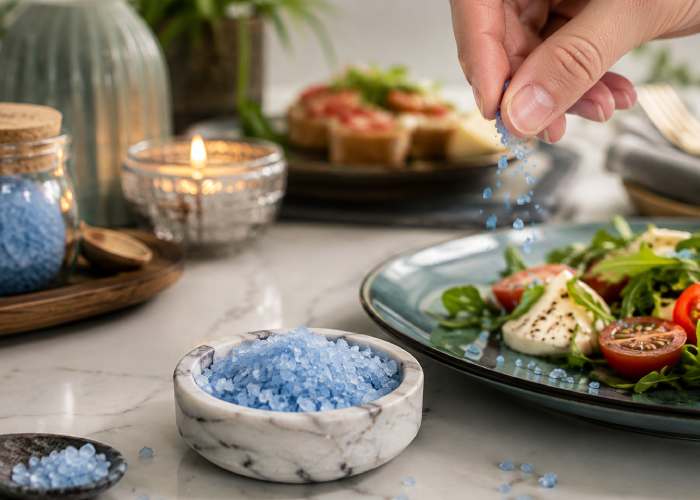
One of the most distinctive features of Blue Salt is its crystalline appearance. Unlike ordinary table salt, which is generally made up of uniform white grains, Blue Salt crystals can create a unique visual effect when placed in a serving dish.
A few crystals placed in a small bowl beside a plate, Blue Salt served in a transparent salt shaker, or crystals placed inside a salt grinder can all give the dining table a more refined and professional appearance.
Blue Salt can also be used as a finishing salt. A small amount can be added to a dish just before serving, allowing you to control the final seasoning while also adding a distinctive visual element to the food.
Idea #1: Serving Blue Salt with Steak
One of the most appealing ways to serve Blue Salt is alongside steak and grilled meats. In this case, you can place a small amount of Blue Salt in a separate dish next to the plate.
This approach has two advantages. First, guests can choose the amount of salt they want to add to their food. Second, the salt crystals become part of the overall presentation of the dish.
For formal dining, using a salt grinder filled with Blue Salt can also be a practical and elegant option.
Idea #2: Serving Blue Salt with Seafood
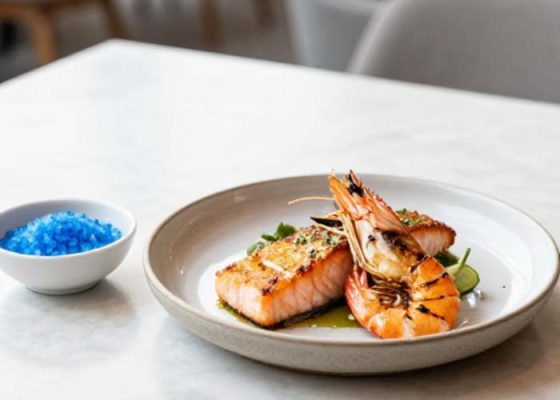
Fish, shrimp, and other seafood dishes are often served with simple seasonings. Placing Blue Salt alongside these foods can provide a distinctive touch to the dining table.
It is generally better to serve the salt separately so that each guest can add the desired amount. This method is particularly suitable for shared dining tables and dinner parties.
Idea #3: Using Blue Salt with Salads
Even simple salads can have a different presentation when served with a small bowl of specialty salt.
For example, a small dish of Blue Salt can be placed beside a vegetable salad, Mediterranean salad, or avocado salad.
There is no need to sprinkle a large amount of salt over the salad. The goal is to use it in a controlled way while complementing the overall dining experience.
Idea #4: Blue Salt on the Breakfast Table
Blue Salt is not limited to main meals. It can also be incorporated into a breakfast setting.
Eggs, avocado, cheese, tomatoes, and fresh vegetables are among the foods that can be served with a specialty salt. A small glass container filled with Blue Salt crystals, placed alongside other breakfast seasonings, can add an elegant touch to the table.
Idea #5: Blue Salt for Formal Dinner Parties
If you are preparing a formal dinner table, it can be better to serve seasonings separately rather than adding them directly to every dish.
Using small individual containers for salt, pepper, and other seasonings can make the table look more organized and sophisticated.
In this setting, Blue Salt can serve as a distinctive seasoning while also contributing to the visual presentation of the table.
Is Coarse Blue Salt Better Than Ground Salt?
The ideal grain size depends on how you plan to use the salt.
Coarse Blue Salt crystals are particularly suitable for display and use in salt grinders, while smaller grains can be distributed more easily over food.
For entertaining and table presentation, larger crystals may be more visually appealing, especially when the appearance of the salt is an important part of the presentation.
An Important Tip for Storing Blue Salt
Mineral salts should be stored in a dry environment. Moisture can cause the crystals to stick together and form clumps.
For this reason, it is best to keep Blue Salt in a container with a suitable lid and store it away from direct steam and moisture in the kitchen.
Proper storage not only helps maintain the appearance of the crystals but also makes the salt easier to use when serving food.
Buying Blue Salt for Dining and Food Service
If you are looking for a specialty salt for a restaurant, café, hotel, or home, you can explore different varieties of Blue Salt based on crystal size, packaging, and intended use.
For businesses with higher consumption, wholesale Blue Salt can be a more economical option.
When comparing Blue Salt prices, it is important to consider factors such as crystal type, grain size, weight, purity, and packaging. These factors can affect the final price of the product.
Conclusion
Blue Salt can be much more than a basic cooking ingredient. With its distinctive crystal appearance and natural color, it can become part of the design and overall experience of a dining table.
From steak and seafood to salads and breakfast dishes, Blue Salt can be served in a controlled and elegant way. If quality, appearance, and presentation are important to you, choosing a high-quality mineral salt can add a distinctive finishing touch to your dining experience.
To explore different varieties of Blue Salt and other specialty salts, visit Carnica Store and discover products suitable for both home use and professional food service.
