


salt blog, مطالب نمک
Blue Salt in Everyday Cooking: How to Use This Specialty Salt in Different Foods

مهر
Using Blue Salt in everyday cooking is not limited to luxury dishes or fine-dining restaurants. This specialty salt can be used in a wide variety of everyday foods, as long as you choose the right amount and add it at the appropriate stage of cooking.
If you have always used the same type of salt, trying a different variety can be a simple way to add variety to your everyday cooking.
When Should You Add Blue Salt?
One of the best ways to use Blue Salt is to add it during the final stage of cooking. This allows you to control the amount of salt more precisely and adjust the final flavor of the dish.
For foods that require a long cooking time, you can add part of the salt during cooking and use a small amount at the end. This approach can help you control the final level of seasoning more effectively.
Blue Salt with Rice
Rice is a staple food on many Iranian dining tables. Blue Salt can be used in an appropriate amount when preparing the rice water or added during serving.
However, if you have already added salt to the cooking water, avoid adding a large amount of additional salt at the end. Adjust the final seasoning gradually according to taste.
Blue Salt with Eggs
Fried eggs, omelets, and boiled eggs are some of the simplest foods to try with Blue Salt.
A few small crystals of Blue Salt sprinkled over eggs can add a distinctive touch to the dish while also making its presentation more appealing.
Because eggs are relatively simple in flavor, they can be a convenient food for experiencing the visual and culinary characteristics of a specialty salt.
Blue Salt with Potatoes
Baked, boiled, or fried potatoes can also be seasoned with a small amount of Blue Salt.
For baked potatoes, adding the salt after cooking can make it easier to control the amount used. You can start with a small quantity and add more if necessary.
Blue Salt can also be served separately alongside potatoes, allowing everyone to season their food according to their preference.
Blue Salt in Salads
Everyday salads such as Shirazi salad or simple lettuce salads can also be prepared with Blue Salt.
It is better to combine the vegetables with the other ingredients and dressings first, then add an appropriate amount of salt.
For salads, using a moderate amount is especially important because the salt should complement the other ingredients rather than overpower their natural flavors.
Blue Salt with Cooked Vegetables
Vegetables such as zucchini, carrots, mushrooms, corn, and bell peppers can be seasoned with a small amount of Blue Salt.
When grilling or roasting vegetables, adding salt toward the end of the cooking process can make it easier to control the final flavor.
This method is also useful when you want to highlight the natural taste and texture of roasted vegetables.
Blue Salt for Meat and Chicken
Blue Salt can also be used with a variety of meat and chicken dishes.
Depending on the recipe, you can season the meat with an appropriate amount of salt before cooking or add it at the end as a finishing seasoning.
The right method depends on the type of food, cooking technique, and recipe. For some dishes, seasoning before cooking is appropriate, while others may benefit from a small amount of finishing salt before serving.
Using Blue Salt in Soup and Stew
For liquid-based foods such as soups and traditional stews, salt is best added gradually.
Start with a small amount, taste the food, and add more if necessary. This simple approach can help prevent the dish from becoming overly salty.
Because the flavor of soup or stew can change during cooking as water evaporates, it is often useful to check the seasoning again near the end of the cooking process.
Semnan Blue Salt
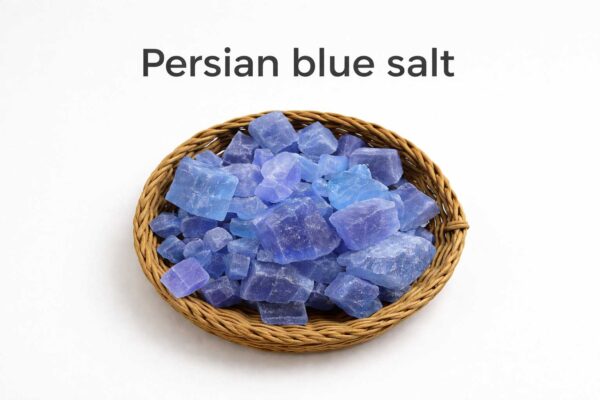
One of the terms commonly used when searching for this product is Semnan Blue Salt. This name refers to mineral Blue Salt associated with the salt deposits of the Semnan region in Iran.
At Carnica Store, mineral salts sourced from mines in Semnan Province are also offered, providing an option for customers looking for specialty Iranian salts.
Blue Salt Price
The Blue Salt Price can vary depending on several factors, including the weight of the package, crystal type, grain size, quality, and packaging.
Therefore, when comparing different Blue Salt products, it is important to look beyond the listed price and check the package weight and product specifications as well.
The size and appearance of the crystals may also be important for customers who plan to use Blue Salt not only as a cooking ingredient but also as a finishing salt for food presentation.
Wholesale Blue Salt
Restaurants, food stores, cafés, and businesses with high consumption may consider Wholesale Blue Salt as an option for managing their regular supply.
Buying Blue Salt in suitable quantities can make inventory management easier and may be more practical for businesses that use specialty salt regularly.
When purchasing wholesale, it is important to consider factors such as crystal size, packaging, product quality, and storage conditions.
Conclusion
Blue Salt can easily become part of everyday cooking. Rice, eggs, salads, potatoes, vegetables, meat, and chicken are just some of the foods that can be prepared or served with this distinctive mineral salt.
The key is to use salt in moderation and, whenever possible, adjust the amount toward the end of cooking. This allows you to better control the final taste of your food.
Whether you are looking for Semnan Blue Salt for everyday cooking or specialty salt for food presentation, choosing a suitable product based on its quality, crystal size, packaging, and intended use can make a difference.
To explore Blue Salt and other specialty mineral salts, visit Carnica Store.
